


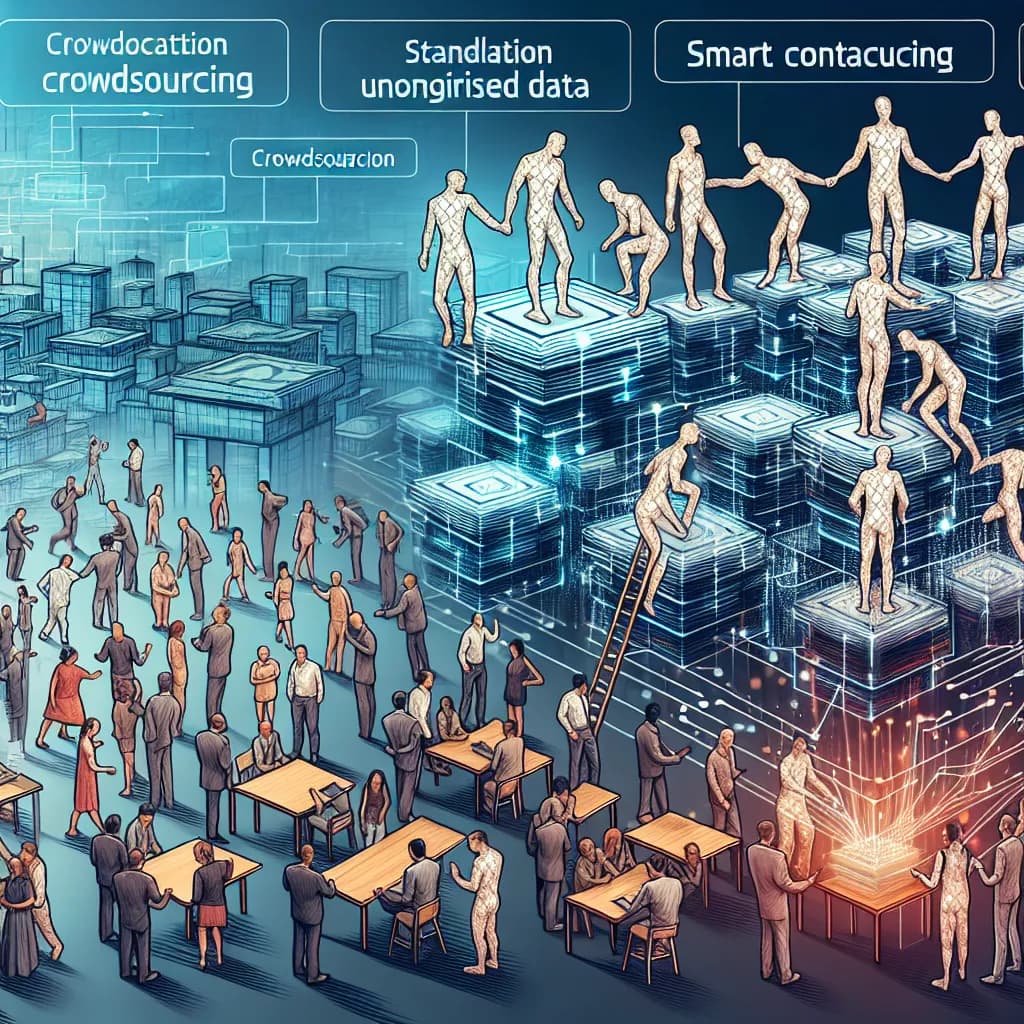
Standardised and Crowdsourced Smart Contract Labels &…
The blockchain ecosystem thrives on data. However, one of the major challenges it faces is the fragmented nature of smart contract labelling datasets. These datasets, isolated and inconsistently formatted, hinder interoperability and accessibility. To solve this, a proposal has emerged that could potentially revolutionize how the blockchain community handles contract labelling: the introduction of a Standardised and Crowdsourced Smart Contract Labels & ABIs initiative. This visionary approach aims not only to standardise data models but also to harness the power of community engagement.
The Importance of Standardisation in Blockchain Data
Smart contracts are self-executing contracts with terms directly written into code. While these contracts can automate and facilitate various transactions across the blockchain, the current lack of robust, standardised labelling conventions impedes data providers from achieving seamless integration. By standardising smart contract labels and application binary interfaces (ABIs), the blockchain community stands to gain immense benefits including improved interoperability, a more seamless user experience, and higher data accuracy.
Why Standardised Data Models Matter
- Improved Interoperability: Different blockchain platforms and applications can exchange data more efficiently when a standard model is in place.
- Consistency and Accuracy: Standardisation ensures that smart contract labels are consistent and accurate across different databases, reducing the risk of misinterpretation.
- Enhanced User Experience: Developers and end-users will find it easier to interact with blockchain data when it is uniformly formatted.
The Role of Crowdsourcing in Data Labeling
While standardisation forms the backbone of the proposal, the true innovation lies in integrating the community into the labelling process. Crowdsourcing opens up the data labelling effort to a broader audience, making it not only more democratic but also more comprehensive.
Benefits of Crowdsourcing
- Diverse Insights: By inviting the community to contribute, we tap into a pool of diverse perspectives and expertise, enriching the data quality.
- Scalability: Crowdsourced efforts can scale more rapidly compared to efforts by a closed team of data scientists.
- Engagement and Ownership: When the community is involved in the labelling process, they are more likely to use, trust, and promote the database.
Lowering Barriers to Entry
To make crowdsourced labelling feasible, it's crucial to lower the entry barriers. This can be achieved through user-friendly front ends and open API endpoints for seamless integration. By simplifying the contribution process, we encourage broader participation and make it easier for anyone to add value to the database.
User-Friendly Front Ends
- Intuitive UI: Interfaces should be designed to be as intuitive as possible, ensuring that even non-technical users can contribute meaningfully.
- Guided Tutorials: Providing step-by-step instructions can help new users navigate the system easily and start contributing quickly.
Open API Endpoints
- Ease of Integration: Open APIs facilitate smooth interaction between the standardized database and various blockchain applications.
- Automated Contributions: Developers can write scripts to automatically submit data labels, further simplifying the crowdsourcing process.
The Vision: A Decentralised Public Good
The ultimate goal is to develop a comprehensive, standardised, and community-driven label database for smart contracts that evolves into a decentralised public good. This database would not belong to any single entity but would be collectively owned and maintained by the community.
Advantages of a Decentralised Database
- Transparency: A decentralised infrastructure ensures that all contributions and modifications are recorded transparently, enhancing trustworthiness.
- Resilience: Decentralisation eliminates single points of failure, making the database more resilient to disruptions.
- Shared Ownership: Collective ownership encourages responsible stewardship and continuous improvement from the community.
Conclusion
The proposal to establish standardised and crowdsourced smart contract labels and ABIs marks a pivotal shift in the blockchain data community. By standardising data models and fostering community involvement, we can create a unified, comprehensive, and resilient database that serves as a public good. This initiative will undoubtedly shape the future of blockchain data, driving us towards a more democratised, interoperable, and transparent ecosystem.
As we move forward with this vision, the success of this initiative will depend on the active participation and collaboration within the blockchain community. Together, we can build a data infrastructure that is not only standardised and comprehensive but also inclusive and decentralised.
Join us in this transformative journey to revolutionise blockchain data through standardisation and community engagement.