// channel: market-analysis

Hot September inflation pushed Bitcoin below $83,000, renewing questions about rate cuts, Treasury yields, and risk appetite. Here’s how to assess the price move, market positioning, and portfolio exposure without treating one CPI report as a forecast.

Bitcoin’s return above $83,000 stands out as Korean equities move differently, but one session does not prove a lasting decoupling. Ahead of US CPI, liquidity, yields, ETF flows, and risk management matter more than a single price level.

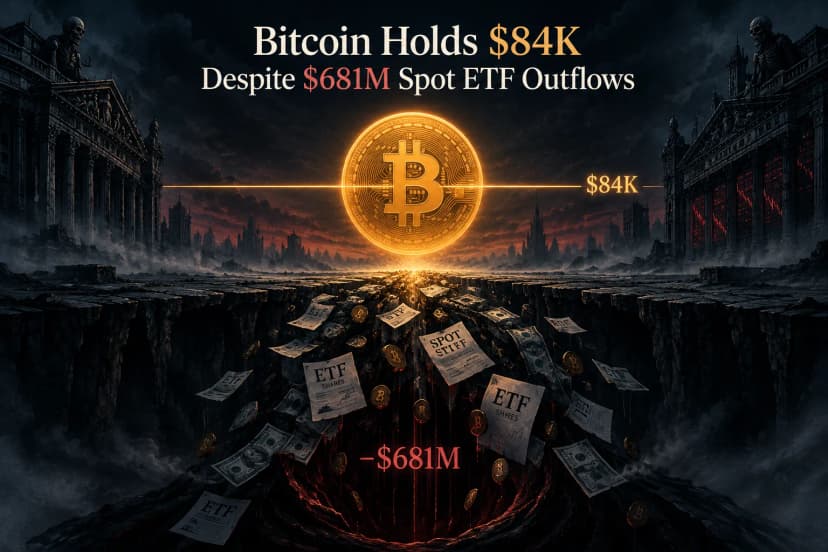
Bitcoin held near $84,000 despite reported $681 million in spot ETF outflows, highlighting that fund flows are only one part of price discovery. Explore what ETF redemptions, market liquidity and investor positioning could mean for BTC—and how to model different price scenarios.

Bitcoin and Ether ETF outflows are nearing $1 billion in October, while XRP funds are reportedly attracting inflows. Here’s how to interpret the flow data, assess price implications, and make more informed allocation decisions.

Reported Ether liquidations of $356 million formed a major share of a roughly $1 billion crypto-market flush, highlighting the risks of crowded leverage. Here’s how to interpret liquidation data, assess ETH positioning, and make allocation decisions without mistaking forced closures for a market forecast.

Ethereum ETF outflows extended to six straight days on October 6, while BlackRock’s ETHA recorded a $202 million loss and spot Bitcoin ETFs added $118.8 million. Here’s how to interpret the ETH-to-BTC rotation signal, what it may mean for prices, and which flow data investors should watch next.

US spot crypto ETF flows turned negative on September 30, with Bitcoin, Ether, and Solana products reporting roughly $221 million in combined net outflows. The reversal ended Bitcoin’s nine-day inflow streak and offers a useful snapshot of institutional positioning—not, by itself, a market forecast.

Rising Treasury yields and oil prices can pressure Bitcoin by lifting inflation concerns, increasing expectations for higher-for-longer interest rates, and reducing appetite for risk assets. This analysis explains the macroeconomic transmission channels, identifies the indicators investors should monitor, and offers practical risk-management steps. The supplied headline does not specify Bitcoin’s price or the date of the move, so the article avoids presenting an unverified price as fact.